The Philosophy of Hellraiser
The Morbid Zoo
762,381 views
Let's talk about pain.
20 Comments

@CJ-Jones 2 years ago Pinned
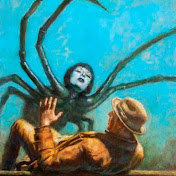
Thomasin is an artist of pain, and her medium is claws.
@serenedoge9920 2 years ago
“We have such sights to show you.”
It’s right there on the tin, really. That’s not a threat.
It’s a joyous invitation.
It’s right there on the tin, really. That’s not a threat.
It’s a joyous invitation.
@montlejohnbojangles8937 2 years ago
Legitimately impressed at your ability to read script while being mauled by a tiny monster. Bravo.
@ollies_insane_asylum 1 year ago
the idea of a hell without a heaven is infinitely more horrifying than anything else
@roble8943 2 years ago
I think the biggest issue with how people write the Cernobites is they forget the pretty damn important fact that they seek unlimited pain AND pleasure. They seek extreme sensations of all sorts, not just the negative ones.
@ClichéGuevara-2814 2 years ago (edited)
When I was at theatre school in the early 90's, I was assigned a prop making task of carving a wooden dagger from a piece of 1" x 4" pine. We were given a template to trace the design onto the wood, and after that we were on our own. This bears relevance.
My good friend was a huge Clive Barker fan, and had just purchased a copy of Weaveworld in anticipation of Barker's appearance at a local book store for a signing & sales . I stood in line beside him as he had his book signed, and then suddenly I was there, facing him, with nothing in my hands. Clive looked at me and i reached into my backpack and produced the piece of wood, with the dagger drawn on it.
"Never signed one of these before.", he offered.
I'd like to think that, all these years later, he still hasn't been asked to sign a small piece of wood with a dagger drawn on it.
That's all.
My good friend was a huge Clive Barker fan, and had just purchased a copy of Weaveworld in anticipation of Barker's appearance at a local book store for a signing & sales . I stood in line beside him as he had his book signed, and then suddenly I was there, facing him, with nothing in my hands. Clive looked at me and i reached into my backpack and produced the piece of wood, with the dagger drawn on it.
"Never signed one of these before.", he offered.
I'd like to think that, all these years later, he still hasn't been asked to sign a small piece of wood with a dagger drawn on it.
That's all.
@carlsonraywithers3368 9 months ago
Hell Priest Pinhead is the most terrifying horror icon of all time not because he is scary or a slasher icon
But because he's a Moral Nietzschean.
But because he's a Moral Nietzschean.
@richietozier7091 2 years ago
One thing I always found interesting was that Leviathan, the Cenobites' boss, wasn't a god of evil, pain, or death, but of order. Typically in mythology, gods of order are seen as "good" deities who are placed as gods to be followed and worshipped. But in Hellraiser, the ultimate "big bad", so to say, isn't an entity that destroys structures, but one that maintains them
@DeeJayConnor 2 years ago
One of the things I disliked most about some of the sequels was studios making the cenobites basically cookie cutter slasher villains instead of them being creatures just doing their job and only going after those who seek them.
One of my favourite scenes in the series is in Hellbound when Pinhead stops the cenobites going after the mute girl because it wasn't her who was actually seeking them despite her solving the box.
One of my favourite scenes in the series is in Hellbound when Pinhead stops the cenobites going after the mute girl because it wasn't her who was actually seeking them despite her solving the box.
@darienkinne1347 1 year ago
I was once riding my skateboard high on acid, and I hit a death pebble that sent me flying onto hard concrete. I felt the impact but it didn’t register as painful, but rather something pleasurable. It just felt like energy moving through my body from the point on impact, it was stimulating. This experience really opened my eyes to how perception of an experience affects its relationship to an individual.
@erynblackbriar7008 2 years ago
The focus on sensation is what most people don't get. That's why the remakes ending made me emotional: the cenobites are appalled because the protagonist chooses to bear the guilt for her actions. A being purely bent on pain and suffering should be satisfied, but they're not because guilt is purely intellectual, it's a self imposed torture born of thought.
@connerblank5069 2 years ago (edited)
The real horror of Hellraisers was never "These people exist, and they might come for you~" It was always supposed to be a more existential "There are people who want this, and with the right circumstance, it could be you."
@good_vibes_mostly 1 year ago
7:19 “existence is pain babies!” and then the cat took that literally 😂
@BillZBubb 2 years ago
The line that sums up the cenobites is ‘explorers on the edge of experience.’ Future Hellraisers need to really meditate on that line.
@ianbyrne465 2 years ago
Hellraiser is my favorite cosmic horror. Because unlike alot of it, it doesn’t just ape Lovecraft’s visual styles and themes. Clive Barker actually considered his own fears and philosophies and made something that fit into that.
Lovecraft was terrified of the concept of an indifferent universe, one that was beyond his comprehension, just as he was afraid of rot and oceanic creatures, and that all informed his writing.
Barker made a universe that is dictated by pain and the blending of sensation beyond all reason. Brutal order and hedonistic stagnation in a way that is not indifferent, but joyous. The cenobite are only concerned with who chooses to join them, they themselves were once humans who sought out this edge of sensation. It’s a different form of cosmic existentialism and I love it for that.
Lovecraft was terrified of the concept of an indifferent universe, one that was beyond his comprehension, just as he was afraid of rot and oceanic creatures, and that all informed his writing.
Barker made a universe that is dictated by pain and the blending of sensation beyond all reason. Brutal order and hedonistic stagnation in a way that is not indifferent, but joyous. The cenobite are only concerned with who chooses to join them, they themselves were once humans who sought out this edge of sensation. It’s a different form of cosmic existentialism and I love it for that.
@NatalieLeeNormentOfficial 1 year ago (edited)
This essay just gave me more courage to face my fears and to go ahead and write cosmic horror. For some reason, I relate more to Clive Barker's cosmic horror stories than Lovecraft's, even though I am a huge fan of both.
@jesterlampoon-t1j 2 years ago
"When you live in pain for so long, it becomes familiar. Familiarity is comforting. And so, I find comfort in my despair."
@dantesinfernal 2 years ago
"Pain never happens in a vacuum." Oh yeah? tell that to my Dyson suction injury.
@shikatsu 1 month ago
Ironically, Hellraiser always makes me think of another film about art, "The Agony and the Ecstasy," the film about the painting of the Sistine Chapel and the work itself...literally painful but oh so beautiful in the end to this day.
@colbycourter 2 years ago
I might also add a dash of Faustian bargaining into the mix. Particularly concerning Frank’s expectations of sensual rewards for going to such great lengths to locate and solve the lament configuration.
The Philosophy of Hellraiser
The Morbid Zoo
762,381 views
Let's talk about pain.