Herbert von Karajan talks to John Culshaw (Rare Interview, BBC 1969) | Part 1
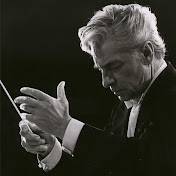
Herbert von Karajan
20 Comments

@rickeysmith-s4o 4 months ago
I saw this man conduct manys times in Berlin from 1970 to 1973 when I was stationed there , when I was in the Army .Cut my young teeth on classical music with this conductor.
@mr-kil247 4 months ago
Love him or loathe him. He was a giant for classical music production. And he seems a more pleasant man than I thought he was going to be.
@kouroushsadeghzadeh1172 1 month ago
Alas I was not old enough to see him conducting. The maestro of maestros!
@uraniastern5755 4 months ago (edited)
I could tell much about this topic - 40 years my topic. Lets meet! Without adjusting the brains, nothing will work anymore. His HvK) brain was ahead of time.
@JosephMayowa-i9c 4 months ago (edited)
Maestro Karajan's openness and fascination for technical devices, which can be seen here,
in a time, where the vhs-video-system was introduced to the market, opened a world to him, of which he obviously was very impressed and he mentioned it in some interviews, that he regretted not being 40 years younger, to be able to accompany the development of the new technology, which combined the previous merely acustical recording with the new optical component.
1980 the vhs-video-recorders were available through the 1980ies, while Maestro Karajan was already working on the new compact-discs, together with SONY-CEO, and he mentioned in one interview, that he regretted very much, that he might not be able to witness the introduction of tge "new record", as he called it,
far "smaller in size", but far bigger in what the CD or DVD was able to store in terms of information.
Maestro von Karajan certainly would be fascinated by what we use today, the "pocket-tv", which allows us not only to determine our "private programme" of what we choose to watch, in our "free-time", but also to have all this technology available in such high quality, optically and acustically.
He certainly is one of the pillars of music in the 20th century, an outstanding scientist of musical science and mentor of the following generation of musicians.
Knowing about the reality of the beyond world and about the truth of the fact, taught in theology, that
"one day in heaven
is better than
1000 days on earth"
Marstro von Karajan has certainly said "good bye" to his promise, to certainly "come back to earth" in the one way or the other, because he was welcomed in the metaphysical sphere
on July 16th, 1989,
certainly saddened by the departure from a loving home here on earth, but certainly also overwhelmed by what expected him there.
Seeing Bach, Mozart, Beethoven, Schubert, Chopin, Liszt, Wagner, Bruckner, Brahms, Borodin, Glasunov, Tschaikowsky and many others, Goethe, Schweitzer etc.,
he is certainly "busy" from the very first moment on there, not too much concerned about what goes on here with our DVDs and SMART-Phones in this perishable world.
Certainly he will have welcomed many of his colleagues, who joined him after 1989, immediately "arresting" them at arrival to join him in his new projects, that he is conducting now there, having completely different approaches to the very composers he now can directly communicate with, asking them, what they meant with this musical phrase etc. etc. .
We here still have to do our works and homeworks here, while we certainly have reason to be glad, that we can continue, what we began here, there, only with quite different possibilities.
How self-evident did the Prophet Mohammed mention the beyond world, when he said in the Hadith No. 652, Volume No. 4, Salih al-Bukhari:
"In this world
and the beyond,
I (Prophet Mohammed) am the one,
who is closest to
Isa, the Son of Mary.
The Prophets are paternal brothers, their mothers may differ,
but
their religion is one and the same".
For the Prophet it was clear, that he would continue in the beyond spiritual world.
For us it remains a task to grow into such self-evident knowledge, that our efforts and doings here are not in vain, but can be continued in the beyond world, while it is a given and prophecied fact, that our deeds and convictions here do follow us into the spiritual life in the heavens
(Revelation 14, 12. 13).
in a time, where the vhs-video-system was introduced to the market, opened a world to him, of which he obviously was very impressed and he mentioned it in some interviews, that he regretted not being 40 years younger, to be able to accompany the development of the new technology, which combined the previous merely acustical recording with the new optical component.
1980 the vhs-video-recorders were available through the 1980ies, while Maestro Karajan was already working on the new compact-discs, together with SONY-CEO, and he mentioned in one interview, that he regretted very much, that he might not be able to witness the introduction of tge "new record", as he called it,
far "smaller in size", but far bigger in what the CD or DVD was able to store in terms of information.
Maestro von Karajan certainly would be fascinated by what we use today, the "pocket-tv", which allows us not only to determine our "private programme" of what we choose to watch, in our "free-time", but also to have all this technology available in such high quality, optically and acustically.
He certainly is one of the pillars of music in the 20th century, an outstanding scientist of musical science and mentor of the following generation of musicians.
Knowing about the reality of the beyond world and about the truth of the fact, taught in theology, that
"one day in heaven
is better than
1000 days on earth"
Marstro von Karajan has certainly said "good bye" to his promise, to certainly "come back to earth" in the one way or the other, because he was welcomed in the metaphysical sphere
on July 16th, 1989,
certainly saddened by the departure from a loving home here on earth, but certainly also overwhelmed by what expected him there.
Seeing Bach, Mozart, Beethoven, Schubert, Chopin, Liszt, Wagner, Bruckner, Brahms, Borodin, Glasunov, Tschaikowsky and many others, Goethe, Schweitzer etc.,
he is certainly "busy" from the very first moment on there, not too much concerned about what goes on here with our DVDs and SMART-Phones in this perishable world.
Certainly he will have welcomed many of his colleagues, who joined him after 1989, immediately "arresting" them at arrival to join him in his new projects, that he is conducting now there, having completely different approaches to the very composers he now can directly communicate with, asking them, what they meant with this musical phrase etc. etc. .
We here still have to do our works and homeworks here, while we certainly have reason to be glad, that we can continue, what we began here, there, only with quite different possibilities.
How self-evident did the Prophet Mohammed mention the beyond world, when he said in the Hadith No. 652, Volume No. 4, Salih al-Bukhari:
"In this world
and the beyond,
I (Prophet Mohammed) am the one,
who is closest to
Isa, the Son of Mary.
The Prophets are paternal brothers, their mothers may differ,
but
their religion is one and the same".
For the Prophet it was clear, that he would continue in the beyond spiritual world.
For us it remains a task to grow into such self-evident knowledge, that our efforts and doings here are not in vain, but can be continued in the beyond world, while it is a given and prophecied fact, that our deeds and convictions here do follow us into the spiritual life in the heavens
(Revelation 14, 12. 13).
@RModillo 4 months ago
Hmmm... announcement of the VCR! Somewhat explains his preoccupation with musical videos, which aren't always considered his best inspiration.
@abkquan 4 months ago
At the time John Culshaw was producing the Ring with Solti, Karajan was also recording for Decca (Aida, Otello, Tosca etc.) so I always wonder why it wasn't the already famous Karajan who was chosen for the Ring (he had already recorded very well received operas in the 1950s for EMI - Rosenkavalier, Ariadne, Falstaff, Hansel & Gretel etc.) but the relatively unknown Solti. As it turned out, the Solti recording became a classic and made Solti's name.
@lauterunvollkommenheit4344 4 months ago
What's the point of recording the sound first and then recording a video?
@skisunfun 4 months ago
At minute 12:10 Culshaw has the classic English "Who do you think you're fooling" look on his face... Karajan would often use musicians for the playback sessions who hadn't even played in the original recording!
@TimothyKeates 4 months ago
Most interesting. However, I do not wish to see comments like "Karajan, the greatest conductor who ever lived..." etc. All this sort of thing, the greatest this, the most wonderful that, etc. etc. is now all over the place, everywhere. Enough. H von K, X von Z, I'm sick of it. Who was 'the greatest player of tiddlywinks or shove-halfpenny? Teens, teens, as Hercule Poirot used to say.