What are the Satanic Verses? | Dr. Ali Ataie
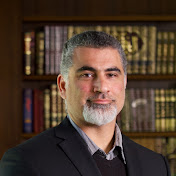
Ali Ataie
22,754 views
What is the so-called “Satanic Verses” incident, and how should Muslims understand one of the most controversial claims associated with the early life of the Prophet Muhammad ﷺ?
In this conversation, Dr. Ali Ataie examines the historical reports surrounding the story commonly known in Western scholarship as the “Satanic Verses.” He explores the origins of the narrative, the early sources in which versions of the story appear, and the way Muslim scholars have evaluated such reports through the disciplines of ḥadīth criticism, sīrah, Qur’anic studies, and historical analysis.
The discussion considers important questions about the reliability of early historical reports, the distinction between transmitted narratives and established Islamic doctrine, and how controversial material from the early Islamic tradition should be approached critically and responsibly. Dr. Ataie also places the discussion within the wider context of the revelation and preservation of the Qur’an, the prophetic mission of Muhammad ﷺ, and the methods Muslim scholars have historically used to assess competing reports about the Prophet’s life.
For those interested in Islamic history, Qur’anic studies, the life of the Prophet ﷺ, or Muslim responses to modern academic and polemical claims, this conversation provides a thoughtful introduction to a subject that is often discussed without sufficient historical or methodological context.
This conversation was originally published on the Blogging Theology YouTube channel in August 2021. A later Blogging Theology upload of the program was published on August 15, 2022.
I would like to offer a special and sincere thank you to Br. Paul Williams for graciously allowing me to host this conversation on my own channel. I am deeply grateful for his generosity and for the important work he has done through Blogging Theology, creating a platform for serious long-form conversations about Islam, Christianity, scripture, theology, history, and comparative religion.
Br. Paul has provided a space where complex and sometimes controversial subjects can be discussed with the time and depth they deserve, and I am very appreciative that he has allowed me to make this discussion available here as well.
Please support Br. Paul Williams and the Blogging Theology YouTube channel, and be sure to explore their extensive collection of conversations with scholars of Islam, Christianity, biblical studies, and comparative theology.
Subscribe for more lectures and discussions on Islam, the Qur’an, the Prophet Muhammad ﷺ, Christianity, biblical studies, Islamic history, and comparative religion.
#AliAtaie #DrAliAtaie #SatanicVerses #ProphetMuhammad #Quran #Islam #IslamicHistory #Hadith #Seerah #QuranicStudies #BloggingTheology #PaulWilliams #IslamicStudies
20 Comments

What are the Satanic Verses? | Dr. Ali Ataie
Ali Ataie
22,754 views
What is the so-called “Satanic Verses” incident, and how should Muslims understand one of the most controversial claims associated with the early life of the Prophet Muhammad ﷺ?
In this conversation, Dr. Ali Ataie examines the historical reports surrounding the story commonly known in Western scholarship as the “Satanic Verses.” He explores the origins of the narrative, the early sources in which versions of the story appear, and the way Muslim scholars have evaluated such reports through the disciplines of ḥadīth criticism, sīrah, Qur’anic studies, and historical analysis.
The discussion considers important questions about the reliability of early historical reports, the distinction between transmitted narratives and established Islamic doctrine, and how controversial material from the early Islamic tradition should be approached critically and responsibly. Dr. Ataie also places the discussion within the wider context of the revelation and preservation of the Qur’an, the prophetic mission of Muhammad ﷺ, and the methods Muslim scholars have historically used to assess competing reports about the Prophet’s life.
For those interested in Islamic history, Qur’anic studies, the life of the Prophet ﷺ, or Muslim responses to modern academic and polemical claims, this conversation provides a thoughtful introduction to a subject that is often discussed without sufficient historical or methodological context.
This conversation was originally published on the Blogging Theology YouTube channel in August 2021. A later Blogging Theology upload of the program was published on August 15, 2022.
I would like to offer a special and sincere thank you to Br. Paul Williams for graciously allowing me to host this conversation on my own channel. I am deeply grateful for his generosity and for the important work he has done through Blogging Theology, creating a platform for serious long-form conversations about Islam, Christianity, scripture, theology, history, and comparative religion.
Br. Paul has provided a space where complex and sometimes controversial subjects can be discussed with the time and depth they deserve, and I am very appreciative that he has allowed me to make this discussion available here as well.
Please support Br. Paul Williams and the Blogging Theology YouTube channel, and be sure to explore their extensive collection of conversations with scholars of Islam, Christianity, biblical studies, and comparative theology.
Subscribe for more lectures and discussions on Islam, the Qur’an, the Prophet Muhammad ﷺ, Christianity, biblical studies, Islamic history, and comparative religion.
#AliAtaie #DrAliAtaie #SatanicVerses #ProphetMuhammad #Quran #Islam #IslamicHistory #Hadith #Seerah #QuranicStudies #BloggingTheology #PaulWilliams #IslamicStudies