Why Your Guitar Tracks Sound Sloppy (And How To Fix Them)
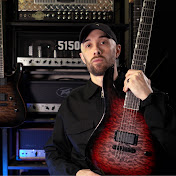
Josh Middleton
25,983 views
Master the art of recording and editing tight metal guitars here: https://recordtightguitars.thinkific....
20 Comments

@officialWWM 11 months ago (edited)
Spend hours writing, arranging, recording , editing, mixing and mastering, only for no one to ever even listen to it…
@MemoROFL 11 months ago
Took me years to figure out there's no substitute for a good, tight DI, as obvious as that seems now. All the fancy software and filters and means we have now of microediting songs to try and paper over mistakes makes it easy to think that's the way to do things - but taking the time to really, really learn the song and track your DIs to a high standard saves a lot of headaches, and gets you a better final product
@iloveyoual32 10 months ago (edited)
This is something I've known for a while now, but hearing you reinforce it is humbling. I play a lot more sloppy than I think I do, and recording has really shown how messy I can be a lot of the time. It has made tracking a chore, really, and I've definitely stretched and warped a take into place or left a mistake in to avoid rerecording the same riff for the 500th time... Definitely something I need to address and simply take the time I need to get the right take
@buckycore 11 months ago (edited)
There's this mind set with musicians and music producers in getting entire tracks and albums done in a day because of Instagram/TikTok and the likes. I come from the elder school...i do it many, many times as you're saying here in this video
And the best part of amp sims is you can really mess with the gain amount during tracking and then for the final mix. So yeah, making it crazy detailed with the noises from high gain reallly does help in learning to be precise
And the best part of amp sims is you can really mess with the gain amount during tracking and then for the final mix. So yeah, making it crazy detailed with the noises from high gain reallly does help in learning to be precise
@WraithVanglorious 9 months ago
The advice around the 11:10 mark is EXCELLENT! Every guitarist needs to hear this shit.
@axismoor 11 months ago (edited)
Thank you for the video! From my experience, recording guitars for one song never takes less than one day. More likely I will spend 3-5 days, or even more, depending on guitar tracks we need. I normally do 7-15 good takes for every part (x2 on double tracks, of course), and it’s never too much when it comes to editing. And editing still can take more time than recording. My personal tip for home studio guys like me: never edit your guitars right after recording. Track them today, edit them tomorrow. Constant switching between these two skills may be too frustrating.
@drrodopszin 11 months ago
Actually this is quite validating. I felt like an idiot tracking the same bit in 3 different sessions, practicing in-between some of them and trying to come up the right technique to make a mid-tempo alternate picking right: even down-up phrases, now swallowing the end of the phrase, lifting my left hand enough to skip making the screeching noise between positions... So you say this is the right attitude then.
@thesaguitarian9430 11 months ago
I was recently struggling with this latest project in terms of blaming a lot of things like the IR sucks, the Amp SIM is not cutting it etc. Then I just thought, "Screw it, let me start from 0 again and re-record tracks". It did not necessarily solved the issue 100% but it did at least 80% of it, then found a better way to utilize the Amp sim and IRs I have to work with the fresh tracks. It worked so yeah, spending time and go through small details ultimately makes a better track than rushing things just because you want to release something right away.
@chopshop777 4 months ago
There is somewhere that Bob Rock made Hetfield play each riff a 100 times during the recording of the black album. awesome advice as always Josh, cheers to ya
@RedEyeC 10 months ago
A studio guitarist (and multi-instrumentalist) - playing live, and recording are a world apart. I've done both for many years - but now am strictly studio. It is something you just get used to - and with today's technologies, much easier than it used to be. I find having the instrument you are used to playing with - that has a better studio sound - and recording to a looped section of the track - is best. That way you could play almost endlessly until the rhythm / lead sections are optimal. With copy / paste - parts can be fitted together easier than yesterdays takes. Lots of plug-ins / VSTs to apply during production.
@kyleolin3566 9 months ago
Great advice. I’ve been playing music for years and am coming out of a slump (Life has been insanely busy for the last decade and I experienced some serious burnout).
Finally got the recording setup I have been working towards for years (able to record everything from guitars to vocals and even acoustic drums).
My issue has always been perfectionism mixed with playing above my means. This video is exactly what I needed to hear to dial in my writing/recording process.
Finally got the recording setup I have been working towards for years (able to record everything from guitars to vocals and even acoustic drums).
My issue has always been perfectionism mixed with playing above my means. This video is exactly what I needed to hear to dial in my writing/recording process.
@SithKage 11 months ago
All of this is so important. I agree that you should always set time aside if you’re busy and focus on 1 or 2 parts. I always go through a few versions of a section in a song, listening back and re-tracking if needed before I even move on. Always beneficial.
@OskarSylwester 11 months ago (edited)
Very substantive material, and it gets to the heart of the matter. This is something that is really worth thinking about, because it's not just the EQ or sliders that matter, or the only playing process itself, but the approach to the entire recording session that determines the final results.
@josh_lv4268 11 months ago
Scott Atkins' mixes are amazing. One of my favourite records he mixed is Solitude in Madness (2020) by Vader. C# standard tuning as well.
@Aggro1992 11 months ago
Yep. That's why I took 2.5 months to record guitars for Supreme Void album. Each day after work. But the effect is sooo worth it!
@macbeth642 11 months ago (edited)
this is good. I thought you would spend more time on tuning and intonation (strobe tuning for best possible intonation, and checking tuning every couple mins at the least) . It was mentioned briefly but I would consider these probably of #1 or #2 top importance.
Why Your Guitar Tracks Sound Sloppy (And How To Fix Them)
Josh Middleton
25,983 views
Master the art of recording and editing tight metal guitars here: https://recordtightguitars.thinkific....
And now I'm gonna watch the video.