I Tracked Every Set: My Current 4-Day Routine | Part 1 of 3
Measured Strength
135 views
I track my training pretty closely, so for this video I went back through the numbers to see what's actually improving, what's gone backward, and what I somehow managed not to notice at all.
This is Part 1 of a three-part look at where I am right now: training first, diet in Part 2, and my Bod Pod body-composition data in Part 3.
CHAPTERS
0:00 My Training Right Now
0:44 Why I Switched to 4 Days
1:11 How I Measure Weekly Volume
1:52 Upper A
3:07 Lower A
4:08 Upper B
5:23 Lower B
6:31 What Counts as a Starting Point
6:50 What the Numbers Show
7:48 Where I Moved Up Too Fast
8:59 What I Still Need to Fix
Right now I'm training four days a week using an Upper A / Lower A / rest / Upper B / Lower B schedule.
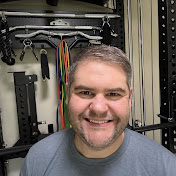
Moving from a commercial gym to a home gym meant losing access to equipment like a leg press, leg extension and leg curl machine, so a lot of my lower-body training had to change. Most of the routine is now built around my Mikolo Anubis 2.0 Elite rack and Freak Athlete ABX bench, along with free weights and cable work.
In this video I go through all 24 exercises in my current program, including sets, rep ranges, weight, and the reps from my most recent sessions. I also break down how I'm tracking weekly volume, including indirect work that I count as half a set.
More importantly, I went back through the logs to see what has actually happened since I started these exercises.
Some lifts have moved in the right direction. Others haven't. A few are lighter now because I increased the weight too aggressively and eventually had to back off.
And one exercise sat at the exact same weight for five straight sessions without me realizing it until I reviewed the logs for this video.
That led me to change the way I'm progressing my lifts: instead of increasing weight as soon as I reach the top of the range once, I'm now waiting until I do it for two sessions.
I'm still figuring things out. My lower-body days are especially draining, and there are still areas like my rear delts and lower chest that I want to improve.
That's the point of this series: measure what I'm doing, look at what the numbers actually say, and adjust from there.
Part 2 will cover my diet and nutrition.
Part 3 will go through my Bod Pod results and the body-composition changes behind all of this.
3 Comments

I Tracked Every Set: My Current 4-Day Routine | Part 1 of 3
Measured Strength
135 views
I track my training pretty closely, so for this video I went back through the numbers to see what's actually improving, what's gone backward, and what I somehow managed not to notice at all.
This is Part 1 of a three-part look at where I am right now: training first, diet in Part 2, and my Bod Pod body-composition data in Part 3.
CHAPTERS
0:00 My Training Right Now
0:44 Why I Switched to 4 Days
1:11 How I Measure Weekly Volume
1:52 Upper A
3:07 Lower A
4:08 Upper B
5:23 Lower B
6:31 What Counts as a Starting Point
6:50 What the Numbers Show
7:48 Where I Moved Up Too Fast
8:59 What I Still Need to Fix
Right now I'm training four days a week using an Upper A / Lower A / rest / Upper B / Lower B schedule.
Moving from a commercial gym to a home gym meant losing access to equipment like a leg press, leg extension and leg curl machine, so a lot of my lower-body training had to change. Most of the routine is now built around my Mikolo Anubis 2.0 Elite rack and Freak Athlete ABX bench, along with free weights and cable work.
In this video I go through all 24 exercises in my current program, including sets, rep ranges, weight, and the reps from my most recent sessions. I also break down how I'm tracking weekly volume, including indirect work that I count as half a set.
More importantly, I went back through the logs to see what has actually happened since I started these exercises.
Some lifts have moved in the right direction. Others haven't. A few are lighter now because I increased the weight too aggressively and eventually had to back off.
And one exercise sat at the exact same weight for five straight sessions without me realizing it until I reviewed the logs for this video.
That led me to change the way I'm progressing my lifts: instead of increasing weight as soon as I reach the top of the range once, I'm now waiting until I do it for two sessions.
I'm still figuring things out. My lower-body days are especially draining, and there are still areas like my rear delts and lower chest that I want to improve.
That's the point of this series: measure what I'm doing, look at what the numbers actually say, and adjust from there.
Part 2 will cover my diet and nutrition.
Part 3 will go through my Bod Pod results and the body-composition changes behind all of this.
That’s what pushed me to change my progression rule and wait until I hit the top of the rep range for two sessions before adding weight.
Have you ever looked back at your training log and found something you didn’t notice in the moment?