The Terrifying Scale of the Largest Planet We've Ever Found
Sleep On Science
233,319 views
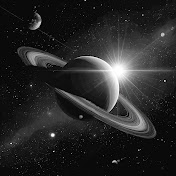
The largest planet ever discovered is more than twice the width of Jupiter, yet weighs less than half as much. Its density is lower than a marshmallow. It is being inflated to death by its own star, and within a few hundred million years, it will cease to exist entirely.
But this impossibly bloated world is only the beginning of the story.
In this documentary, we explore three different extremes of planetary scale, the widest planets, the most massive planets, and the worlds still being born, and discover that each one pushes the word "planet" closer to its breaking point. From the cotton-candy density of WASP-193b to the deuterium-burning boundary where planets blur into failed stars, to the actively accreting protoplanets of PDS 70 caught growing in real time by ALMA, the largest planets are not just bigger than Jupiter. They expose the uncomfortable truth that "planet" was never the stable category we assumed it was.
Sources:
Wang, G. et al. (2025). "A Revised Density Estimate for the Largest Known Exoplanet, HAT-P-67 b." The Astronomical Journal, 169, 336. https://doi.org/10.3847/1538-3881/adcec9
Barkaoui, K. et al. (2024). "An extended low-density atmosphere around the Jupiter-sized planet WASP-193 b." Nature Astronomy. https://doi.org/10.1038/s41550-024-02...
Benisty, M. et al. (2021). "A Circumplanetary Disk around PDS 70c." The Astrophysical Journal Letters, 916, L2. https://doi.org/10.3847/2041-8213/ac0f83
Currie, T. et al. (2025). "VLT/MUSE Detection of the AB Aurigae b Protoplanet with Hα Spectroscopy." The Astrophysical Journal Letters. https://doi.org/10.3847/2041-8213/adf7a0
Spiegel, D. S., Burrows, A., & Milsom, J. A. (2011). "The Deuterium-Burning Mass Limit for Brown Dwarfs and Giant Planets." The Astrophysical Journal, 727, 57. https://doi.org/10.1088/0004-637X/727...
#Exoplanets #LargestPlanet #HotJupiter #SpaceDocumentary #PlanetaryScience #HATP67b #Protoplanets
20 Comments

Astronomy: “Cute. Let me show you something bigger.” 😂
The Terrifying Scale of the Largest Planet We've Ever Found
Sleep On Science
233,319 views
The largest planet ever discovered is more than twice the width of Jupiter, yet weighs less than half as much. Its density is lower than a marshmallow. It is being inflated to death by its own star, and within a few hundred million years, it will cease to exist entirely.
But this impossibly bloated world is only the beginning of the story.
In this documentary, we explore three different extremes of planetary scale, the widest planets, the most massive planets, and the worlds still being born, and discover that each one pushes the word "planet" closer to its breaking point. From the cotton-candy density of WASP-193b to the deuterium-burning boundary where planets blur into failed stars, to the actively accreting protoplanets of PDS 70 caught growing in real time by ALMA, the largest planets are not just bigger than Jupiter. They expose the uncomfortable truth that "planet" was never the stable category we assumed it was.
Sources:
Wang, G. et al. (2025). "A Revised Density Estimate for the Largest Known Exoplanet, HAT-P-67 b." The Astronomical Journal, 169, 336. https://doi.org/10.3847/1538-3881/adcec9
Barkaoui, K. et al. (2024). "An extended low-density atmosphere around the Jupiter-sized planet WASP-193 b." Nature Astronomy. https://doi.org/10.1038/s41550-024-02...
Benisty, M. et al. (2021). "A Circumplanetary Disk around PDS 70c." The Astrophysical Journal Letters, 916, L2. https://doi.org/10.3847/2041-8213/ac0f83
Currie, T. et al. (2025). "VLT/MUSE Detection of the AB Aurigae b Protoplanet with Hα Spectroscopy." The Astrophysical Journal Letters. https://doi.org/10.3847/2041-8213/adf7a0
Spiegel, D. S., Burrows, A., & Milsom, J. A. (2011). "The Deuterium-Burning Mass Limit for Brown Dwarfs and Giant Planets." The Astrophysical Journal, 727, 57. https://doi.org/10.1088/0004-637X/727...
#Exoplanets #LargestPlanet #HotJupiter #SpaceDocumentary #PlanetaryScience #HATP67b #Protoplanets