Ventilation vs. Insulation - Wintering Strategies for Northern Beekeepers
Anchorage Backyard Beekeeping
1,451 views
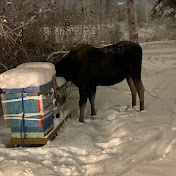
A data based review of traditional and modern wintering strategies.
6 Comments

@aaronparis4714 2 years ago
He is good he is very smart my Yukon friend im glade you listen to us Canadians
@Dan-po7uf 2 years ago
In Fairbanks Alaska, I overwinter with a 25-watt heated hive stand, 2, 10 frame deep boxes, 4" blue foam insulation on all 4 sides, a veltilated top box full of wood shavings with a 4" sleeve to drop in a mason jar for feeding, and 4" of blue foam insulation on top. Haven't lost a colony.
@rosem7042 2 years ago (edited)
Every tree-hollow would DEFINITELY have one wall/side that would be thinner/less-insulated than the others. Probably not the ceiling. That is all you'd need to know, because moisture would condense on the thinnest wall and be available to slurp up for their various needs. Boom.
Insulate with the highest r-value on top, moderate r-value on three sides, one side with no/less insulation than the others to act as a condenser that makes moisture available, and a way for the excess to drain from the bottom without being drafty enough to chill them beyond their ability to tolerate. That's it. Your bees will be happy, given that they were healthy going into winter to begin with.
Insulate with the highest r-value on top, moderate r-value on three sides, one side with no/less insulation than the others to act as a condenser that makes moisture available, and a way for the excess to drain from the bottom without being drafty enough to chill them beyond their ability to tolerate. That's it. Your bees will be happy, given that they were healthy going into winter to begin with.
@aaronparis4714 2 years ago
I am from Canada and I use wood but mostly poly hives and your nailed it to a key insulation is big and I wish I could get some old timers to listen this is the best method I know my my bees eat .5 pounds of food a week and a wood hive with top entrance would eat 3 pounds
@slava790 2 years ago
What do Quiney'S RN and BSN degrees have to do with beekeeping? A bit pretentious.
Ventilation vs. Insulation - Wintering Strategies for Northern Beekeepers
Anchorage Backyard Beekeeping
1,451 views
A data based review of traditional and modern wintering strategies.