The Most Diverse Geology on Earth? NW Wyoming - Jackson Hole by John Hebberger Jr.
Geologists of Jackson Hole
2,721 views
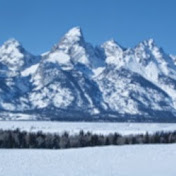
Through more than 2.8 billion years of time, many geologic events and processes have combined to create the dramatic scenery of the area. This talk will take you through those events and processes. They include:
1. The earliest recognized continent – continent plate collision.
2. Evidence of the break-up of the Rodinia supercontinent.
3. The “great(est)” unconformity, spanning more than 2by of time.
4. Continental drift from equatorial seas to northern mid-latitudes.
5. A half billion years of sedimentation, while at or near to sea level.
6. Late Mesozoic – early Cenozoic arrival of the Thrust Belt.
7. Late Mesozoic – early Cenozoic development of basement cored Foreland Uplifts and their adjacent deep basins.
8. Major Cenozoic volcanism that formed the present-day Absaroka Range.
9. Yellowstone volcanism, moving through the craton and arriving at today’s location in Yellowstone National Park.
10. Major regional late Miocene uplift and resultant ongoing erosion.
11. Latest Miocene and early Pliocene arrival of Basin & Range extension into western Wyoming.
12. Repeated Pleistocene glaciation, both Alpine and quasi-continental (the latter from the Yellowstone uplift).
All these events & processes are evident to the geologist’s eye, and have resulted in this dramatic scenery, as well as the flora, and fauna of the area - and the national parks and forests that are prominent socio-political features of NW Wyoming.
1 Comments

The Most Diverse Geology on Earth? NW Wyoming - Jackson Hole by John Hebberger Jr.
Geologists of Jackson Hole
2,721 views
Through more than 2.8 billion years of time, many geologic events and processes have combined to create the dramatic scenery of the area. This talk will take you through those events and processes. They include:
1. The earliest recognized continent – continent plate collision.
2. Evidence of the break-up of the Rodinia supercontinent.
3. The “great(est)” unconformity, spanning more than 2by of time.
4. Continental drift from equatorial seas to northern mid-latitudes.
5. A half billion years of sedimentation, while at or near to sea level.
6. Late Mesozoic – early Cenozoic arrival of the Thrust Belt.
7. Late Mesozoic – early Cenozoic development of basement cored Foreland Uplifts and their adjacent deep basins.
8. Major Cenozoic volcanism that formed the present-day Absaroka Range.
9. Yellowstone volcanism, moving through the craton and arriving at today’s location in Yellowstone National Park.
10. Major regional late Miocene uplift and resultant ongoing erosion.
11. Latest Miocene and early Pliocene arrival of Basin & Range extension into western Wyoming.
12. Repeated Pleistocene glaciation, both Alpine and quasi-continental (the latter from the Yellowstone uplift).
All these events & processes are evident to the geologist’s eye, and have resulted in this dramatic scenery, as well as the flora, and fauna of the area - and the national parks and forests that are prominent socio-political features of NW Wyoming.