The Most Surprising Eating | Border Birds
Border Birds
67,427 views
Welcome to my channel. Hello, everyone. My video content is only for educational purposes, not for animal abuse.
19 Comments

@나팔꽃-h3d 1 month ago
옹기종기 어미 입만바라보고 서로 먹으려 하는 모습이 우리얼릴적 형제많은 가적이 상머리에 앉아 빕먹을때 맛있는 고기나 생선 서로 먹고싶어 엄마손만 바라보던 추억이 그립습니다 사랑스러운 형제들이네요
@jayhouse3149 9 months ago
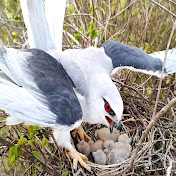
White-tailed Kite (Elanus leucurus)
ORDER: Accipitriformes
FAMILY: Accipitridae
The white-tailed kite (Elanus leucurus) is a fully protected species in California. This small hawk is slightly larger than a crow, about 14–17 inches in length with a wingspan of 35–40 inches. They typically weigh 250–380 g (8.8–13.4 oz). They have a pale gray body, black shoulders, a white head, and long tail. The wings are narrow and pointed. It has deep red eyes and a black beak. White-tailed kites get their name from a distinct hovering behavior known as “kiting.” They beat their wings while facing into the wind, giving the appearance of hanging in the air like a toy kite as they watch for prey moving on the ground. The white-tailed kite breeding season is February to October, with the peak from May to August. Kites are monogamous through the breeding season, although some pairs remain together year-round. Nests of loosely piled sticks and twigs lined with grass, straw, or rootlets are located near open foraging areas and placed near the topes of oaks (Quercus ssp.), willows (Salix ssp.), or other tree stands from 20 -100 feet above ground. The average clutch is four or five eggs, with a range of three to six eggs. The female is responsible for incubation, which lasts about 28 days, and the young fledge in 35-40 days. During the incubation and nestling period, the male feeds the female, and supplies her with food to feed the young. Kits usually produce a single brood per breeding season but may occasionally have two broods. - The Nature Preserve Organization
ORDER: Accipitriformes
FAMILY: Accipitridae
The white-tailed kite (Elanus leucurus) is a fully protected species in California. This small hawk is slightly larger than a crow, about 14–17 inches in length with a wingspan of 35–40 inches. They typically weigh 250–380 g (8.8–13.4 oz). They have a pale gray body, black shoulders, a white head, and long tail. The wings are narrow and pointed. It has deep red eyes and a black beak. White-tailed kites get their name from a distinct hovering behavior known as “kiting.” They beat their wings while facing into the wind, giving the appearance of hanging in the air like a toy kite as they watch for prey moving on the ground. The white-tailed kite breeding season is February to October, with the peak from May to August. Kites are monogamous through the breeding season, although some pairs remain together year-round. Nests of loosely piled sticks and twigs lined with grass, straw, or rootlets are located near open foraging areas and placed near the topes of oaks (Quercus ssp.), willows (Salix ssp.), or other tree stands from 20 -100 feet above ground. The average clutch is four or five eggs, with a range of three to six eggs. The female is responsible for incubation, which lasts about 28 days, and the young fledge in 35-40 days. During the incubation and nestling period, the male feeds the female, and supplies her with food to feed the young. Kits usually produce a single brood per breeding season but may occasionally have two broods. - The Nature Preserve Organization
@WildlifeWorld8386 7 months ago
Unexpected and fascinating — these feeding moments reveal just how creative and surprising survival can be among border birds.
@Ironsja11 9 months ago
Wow, those little guys are already trying to self feed! Amazing, these white tailed kite birds must be smarter than the average chicks.
@베토벤-w5n 9 months ago
이귀여운 병아리새들이
힌꼬리솔개 이군요
먹는모습들도 엉덩이 점프점프
속치마 보이는 귀여운 병아리들
엄청귀엽네요
이모습들이 자연친환경 새들의
행복일상 인거예요
독수리들 혼자독식 먹이땜에
형제살인 첫째가 먹이배채운 후에야 둘째차례가 있는
매정한 독수리보다
이귀여운 새들의 모습이
힐링입니다
힌꼬리솔개 이군요
먹는모습들도 엉덩이 점프점프
속치마 보이는 귀여운 병아리들
엄청귀엽네요
이모습들이 자연친환경 새들의
행복일상 인거예요
독수리들 혼자독식 먹이땜에
형제살인 첫째가 먹이배채운 후에야 둘째차례가 있는
매정한 독수리보다
이귀여운 새들의 모습이
힐링입니다
@jordanscott4706 9 months ago
Not many kites in Scotland a never seen any growing up there a nice looking bird of prey thanks for the uploads
@patriciadavis5939 9 months ago
Wait….now the little has what looks like a rats tail in its throat and trying to eat something else too.😮💨😮💨😮💨
@Sherree-g6l 9 months ago (edited)
Lil guy in the middle has to be quicker than his siblings..❤
What a tug of war thst was.. I cheered when lil guy got the tail..the best part buddy.😊
What a tug of war thst was.. I cheered when lil guy got the tail..the best part buddy.😊
@gsw4life716 8 months ago
The little one is hungry trying to eat what was left all the other crops have food but his it look really skinny
The Most Surprising Eating | Border Birds
Border Birds
67,427 views
Welcome to my channel. Hello, everyone. My video content is only for educational purposes, not for animal abuse.