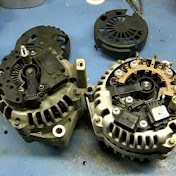
How to Excite the One Wire - Self Exciting Alternator.
alternatorman
930,321 views
visit: https://alternatorparts.com
11 Comments

@michaelbrookover8018 9 years ago
Going to try this. Will let you know if it works!🙏🙏🙏🙏🙏
@prancstaman 12 years ago
One wire alts use marine regulators and it's called flashing the field. If it's not a si series you can flash the field by touching the stator wire with a curcuit light. That way if you accidentally touch the case the light will light up instead of arching.
@Antegrav 11 years ago
I've had good luck just buying an 80's alternator and installing an idiot light to excite it when the key is turned on. (old tractors). Cheaper than buying the "one-wire" jobs. On one tractor, I wired the excitation wire through a 20 ohm resistor to the light switch, so I could just pull the light switch to start it charging if it sat for too long and the self-excitation didn't kick in (this one was a 'one-wire' alternator job).
@Fretsongs 12 years ago
What about 24 volt alternators? Same concept …take the hot coming off 24 volt battery cable/post and hit the "R" terminal on an SI alternator to get it excited? Thanks for the good video and instruction here.
@actorzone856 9 years ago
what I have had to do on the non self exciting alternator is to put a timed relay on the start side so it has 12 volts when the alternator is running for 5 seconds which get the alternators going, wont charge just via key as when engine starts the alternator once running then needs to be excited, the exciting thing was I had a hellovagood time on my project.
@351cleavland 11 years ago
How to excite the 1 wire alternator???? I tell it that we are going to Disneyland-MAN! does it get excited!!!!!
@MusherDeeds 12 years ago
I have a new SI series alternator which I put on an old diesel tractor. I thought it was a 1 wire alternator but after i initially excite the fields and then shut it down, on re-start it doesn't seem like it has any residual magnetism (it no longer charges). Should I install a jumper wire from #2 to the + terminal, and also an "idiot light" in between #1 and the key switch? Thanks.
@VPKustoms 12 years ago
I have a GM10si alternator with internal regulator. I'm rewiring my pickup truck and have no wiring harness and new wires being installed. I have the positive post wires to the battery. My question is. T1 post to the positive post constantly or just momentary to excite it. Would it fry the wire if it is on constantly? And does the t2 post need to be connected?
@whyme2500 12 years ago
can you leave a live 12 volt wire connected to it too excite every time or will it ruin it if it is not spinning
How to Excite the One Wire - Self Exciting Alternator.
alternatorman
930,321 views
visit: https://alternatorparts.com