Shocking International Report | Pakistan vs Afghanistan | Orya Maqbool Jan
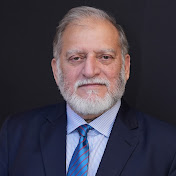
Orya Maqbool Jan
36,714 views
Why is poverty rising in Pakistan while elite privileges and expensive official lifestyles remain at the centre of public debate? What do the latest World Bank findings reveal about ordinary families’ hardships and the country’s economic priorities?
In this episode of Harf e Raaz, Orya Maqbool Jan examines Pakistan’s poverty crisis through the gap between elite privilege and everyday struggles over food, bills, employment and basic services.
The World Bank’s October 2026 economic update reports that Pakistan accounts for approximately 48% of people living in extreme poverty across the Middle East, North Africa, Afghanistan and Pakistan region. Pakistan’s extreme poverty rate increased by 6.4 percentage points between 2018/19 and 2024/25, following the pandemic, devastating floods, high inflation, currency depreciation and prolonged economic adjustment.
The World Bank’s Pakistan country brief lists a poverty rate of 23% at the $3.00-a-day threshold and 47.9% at the $4.20-a-day threshold for 2024/25. These thresholds use 2021 purchasing power parity. The brief also reports declining real wages and consumption losses affecting much of the population, highlighting the pressure on household living standards.
Subscribe for more Harf e Raaz discussions with Orya Maqbool Jan on Pakistan’s economy, governance and international affairs.
Disclaimer:
This program is intended for news analysis, commentary and educational discussion. Reported statistics are attributed to their sources and refer to specified periods and poverty thresholds. Views on elite privileges, public spending and government priorities are commentary. Country comparisons should be assessed using comparable indicators, definitions and reporting years. Viewers should consult original reports and subsequent updates.
#PakistanPoverty #WorldBankReport #PakistanEconomy #HarfERaaz #OryaMaqboolJan
Also Subscribe: @harferaazwithoryamaqbooljan
#OryaMaqboolJan #harferaaz
Follow on:
Twitter: Twitter: OryaMaqboolJan
Facebook: Facebook: OryaMJ
20 Comments

Aap ny Economy or gurbat pr behtareen tajziya or tabsira pesh kiya hy, or aam awaam ko muassar andaaz m educate kiya hy, Allah Pakistan or oss k khair andeshon ko salamat rakkhy, aameen
Shocking International Report | Pakistan vs Afghanistan | Orya Maqbool Jan
Orya Maqbool Jan
36,714 views
Why is poverty rising in Pakistan while elite privileges and expensive official lifestyles remain at the centre of public debate? What do the latest World Bank findings reveal about ordinary families’ hardships and the country’s economic priorities?
In this episode of Harf e Raaz, Orya Maqbool Jan examines Pakistan’s poverty crisis through the gap between elite privilege and everyday struggles over food, bills, employment and basic services.
The World Bank’s October 2026 economic update reports that Pakistan accounts for approximately 48% of people living in extreme poverty across the Middle East, North Africa, Afghanistan and Pakistan region. Pakistan’s extreme poverty rate increased by 6.4 percentage points between 2018/19 and 2024/25, following the pandemic, devastating floods, high inflation, currency depreciation and prolonged economic adjustment.
The World Bank’s Pakistan country brief lists a poverty rate of 23% at the $3.00-a-day threshold and 47.9% at the $4.20-a-day threshold for 2024/25. These thresholds use 2021 purchasing power parity. The brief also reports declining real wages and consumption losses affecting much of the population, highlighting the pressure on household living standards.
Subscribe for more Harf e Raaz discussions with Orya Maqbool Jan on Pakistan’s economy, governance and international affairs.
Disclaimer:
This program is intended for news analysis, commentary and educational discussion. Reported statistics are attributed to their sources and refer to specified periods and poverty thresholds. Views on elite privileges, public spending and government priorities are commentary. Country comparisons should be assessed using comparable indicators, definitions and reporting years. Viewers should consult original reports and subsequent updates.
#PakistanPoverty #WorldBankReport #PakistanEconomy #HarfERaaz #OryaMaqboolJan
Also Subscribe: @harferaazwithoryamaqbooljan
#OryaMaqboolJan #harferaaz
Follow on:
Twitter: Twitter: OryaMaqboolJan
Facebook: Facebook: OryaMJ