ЦАРСКИЕ ГРИБЫ - РЫЖИКИ! МЕГА СБОР ОКТЯБРЯ 2022!
Offroad Mushrooms (Грибы 4х4)
202,137 views
October is the perfect time to go in search of the royal mushrooms – saffron milk caps – in the Moscow region and surrounding areas!
Saffron milk caps are divided into two types – the spruce saffron milk cap and the pine saffron milk cap, which grow in fir and pine trees, respectively. These mushrooms are called "royal" because in ancient times they were highly prized and served at the tables of tsars and nobles. They were also actively exported to Europe, where they remain highly prized. In Italy and Spain, the average price for a kilogram of saffron milk caps currently reaches 32 euros. Residents of Australia and the Mediterranean also enjoy foraging for these mushrooms; the saffron milk cap season in those regions is December-January.
Saffron milk caps, like porcini mushrooms, are classified as Category I food. They can be fried, cold-pickled, pickled, and frozen. Our ancestors would go hunting for saffron milk caps and always take salt with them so they could pickle the first saffron milk caps they found and eat them right in the forest. Saffron milk caps are believed to contain more protein than meat, many beneficial elements, and a natural antibiotic.
To search for saffron milk caps, you should head to fields where small pine or spruce trees grow. They grow in tall, dry grass, which significantly complicates the search for these valuable mushrooms.
Saffron milk caps can be picked despite the first night frosts; these mushrooms tolerate light frosts and the first snow very well.
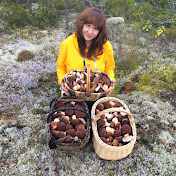
I present to you our report on the Mega-Harvesting of Saffron Milk Caps in the Tula Region on October 22, 2022!
Friends, please subscribe to our channel to stay up-to-date with the latest mushroom news. ⏯️🎦
@offroadmushrooms
Photos and videos of mushroom trips on Instagram ➡️ Instagram: semesh_ka
Photos and videos on VK ➡️
https://www.vk.com/semesh_ka
⚠️ WHY DON'T WE CUT MUSHROOMS WITH A KNIFE?! ⚠️
👉 ANSWER: Our grandparents, who taught us and took us on our first silent mushroom hunts, didn't have modern knowledge. They relied on the advice of their grandparents and taught us the same.
Nevertheless, science does not stand still, and mycologists continue their research, as the world of mushrooms is amazing, diverse, and mysterious.
In the 1980s, a 30-year global study was completed. The experiment was conducted in Switzerland, where three forest plots were identified. In the first, mushrooms were twisted, in the second, they were cut, and in the third, they were left alone. After 30 years, the results were summarized. It turned out that in all three plots, the mycelium fruited equally every year. And after 30 years, the mushroom count had not decreased anywhere.🍄
If that still doesn't convince you, here are the results of a second study. An experiment by mycologists from Oregon, USA, is currently ongoing. Preliminary data on chanterelle myceliums has been obtained over 25 years. Two forest plots were identified: in one, mushrooms are cut, in the other, they are twisted. Each mushroom is logged, dried for further analysis, and its exact location is recorded.👆
According to preliminary results, scientists have noted a slight decline in fruiting in the area where the mushrooms are cut, which is due to bacterial damage caused by the rotting of the remaining stems in the soil.🔪
Let's also look at the simple structure of the mycelium - 7th grade biology. The mycelium is located 30-50 cm underground; no mushroom grows that deep. Mushrooms are the fruiting bodies of the mycelium. 🤷♀️
"Why are you pulling mushrooms out by the roots?" is an amateurish question.
Mushrooms don't have roots. The "threads" that can be seen when twisting a mushroom are hyphae, through which each individual mushroom receives nutrients and water from the soil. They do not affect the growth of the mycelium, but only facilitate the growth of that specific mushroom. After removing the mushroom, no matter how you do it, the hyphae die off. Like a baby's umbilical cord. 🤭
So collect them however you like! 🤗
20 Comments
... невозможно поверить)
Счастливые тульчане
У него особенный, вкус
ЦАРСКИЕ ГРИБЫ - РЫЖИКИ! МЕГА СБОР ОКТЯБРЯ 2022!
Offroad Mushrooms (Грибы 4х4)
202,137 views
October is the perfect time to go in search of the royal mushrooms – saffron milk caps – in the Moscow region and surrounding areas!
Saffron milk caps are divided into two types – the spruce saffron milk cap and the pine saffron milk cap, which grow in fir and pine trees, respectively. These mushrooms are called "royal" because in ancient times they were highly prized and served at the tables of tsars and nobles. They were also actively exported to Europe, where they remain highly prized. In Italy and Spain, the average price for a kilogram of saffron milk caps currently reaches 32 euros. Residents of Australia and the Mediterranean also enjoy foraging for these mushrooms; the saffron milk cap season in those regions is December-January.
Saffron milk caps, like porcini mushrooms, are classified as Category I food. They can be fried, cold-pickled, pickled, and frozen. Our ancestors would go hunting for saffron milk caps and always take salt with them so they could pickle the first saffron milk caps they found and eat them right in the forest. Saffron milk caps are believed to contain more protein than meat, many beneficial elements, and a natural antibiotic.
To search for saffron milk caps, you should head to fields where small pine or spruce trees grow. They grow in tall, dry grass, which significantly complicates the search for these valuable mushrooms.
Saffron milk caps can be picked despite the first night frosts; these mushrooms tolerate light frosts and the first snow very well.
I present to you our report on the Mega-Harvesting of Saffron Milk Caps in the Tula Region on October 22, 2022!
Friends, please subscribe to our channel to stay up-to-date with the latest mushroom news. ⏯️🎦
@offroadmushrooms
Photos and videos of mushroom trips on Instagram ➡️ Instagram: semesh_ka
Photos and videos on VK ➡️
https://www.vk.com/semesh_ka
⚠️ WHY DON'T WE CUT MUSHROOMS WITH A KNIFE?! ⚠️
👉 ANSWER: Our grandparents, who taught us and took us on our first silent mushroom hunts, didn't have modern knowledge. They relied on the advice of their grandparents and taught us the same.
Nevertheless, science does not stand still, and mycologists continue their research, as the world of mushrooms is amazing, diverse, and mysterious.
In the 1980s, a 30-year global study was completed. The experiment was conducted in Switzerland, where three forest plots were identified. In the first, mushrooms were twisted, in the second, they were cut, and in the third, they were left alone. After 30 years, the results were summarized. It turned out that in all three plots, the mycelium fruited equally every year. And after 30 years, the mushroom count had not decreased anywhere.🍄
If that still doesn't convince you, here are the results of a second study. An experiment by mycologists from Oregon, USA, is currently ongoing. Preliminary data on chanterelle myceliums has been obtained over 25 years. Two forest plots were identified: in one, mushrooms are cut, in the other, they are twisted. Each mushroom is logged, dried for further analysis, and its exact location is recorded.👆
According to preliminary results, scientists have noted a slight decline in fruiting in the area where the mushrooms are cut, which is due to bacterial damage caused by the rotting of the remaining stems in the soil.🔪
Let's also look at the simple structure of the mycelium - 7th grade biology. The mycelium is located 30-50 cm underground; no mushroom grows that deep. Mushrooms are the fruiting bodies of the mycelium. 🤷♀️
"Why are you pulling mushrooms out by the roots?" is an amateurish question.
Mushrooms don't have roots. The "threads" that can be seen when twisting a mushroom are hyphae, through which each individual mushroom receives nutrients and water from the soil. They do not affect the growth of the mycelium, but only facilitate the growth of that specific mushroom. After removing the mushroom, no matter how you do it, the hyphae die off. Like a baby's umbilical cord. 🤭
So collect them however you like! 🤗